
by Anna Phalen
Correspondent
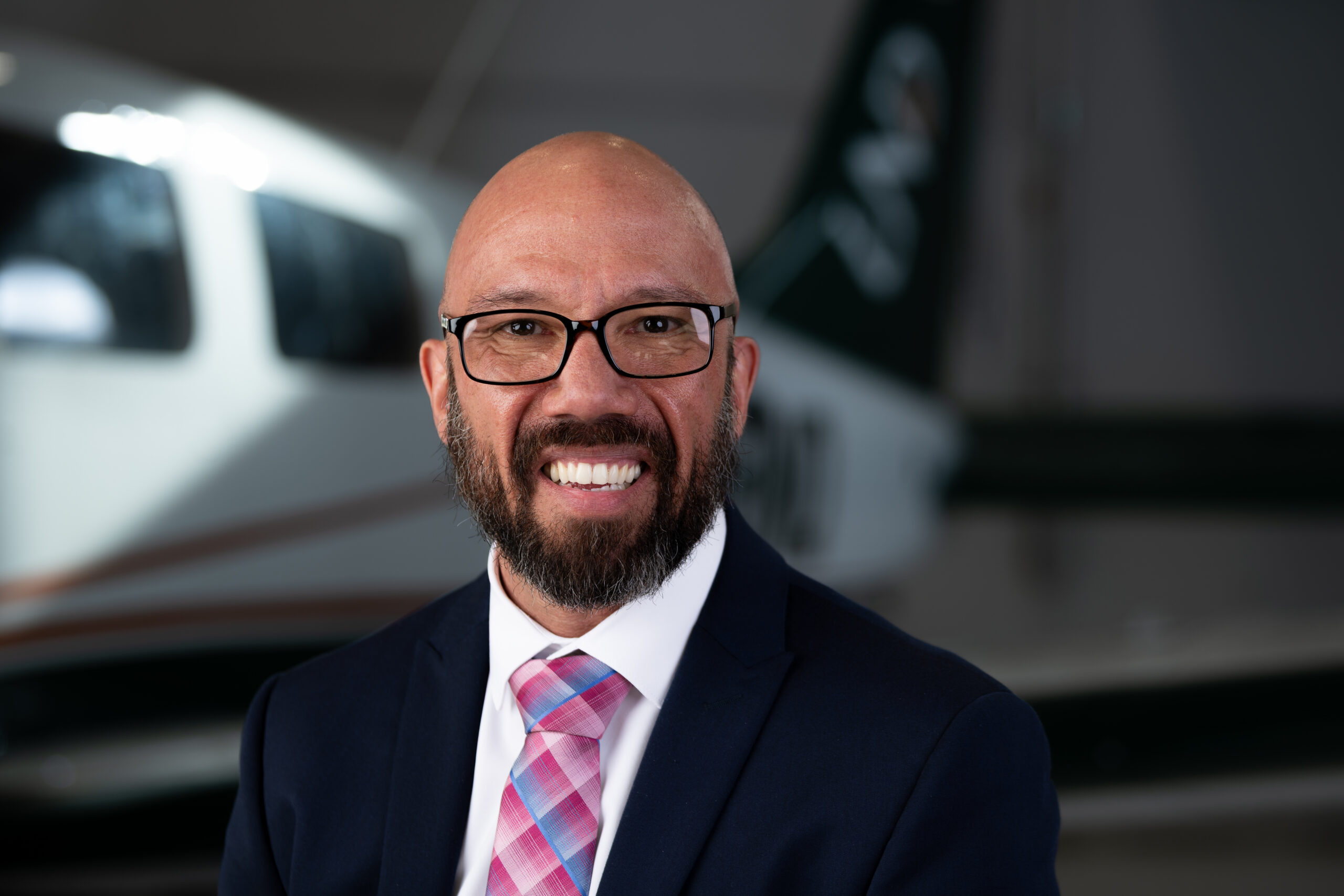
“Just part of the program,” said Shane Mendez of Crookston. “Life is not supposed to be smooth or painless. The setbacks, the suffering, even our failures, are not proof that we are broken. They are just part of the program of life.”

“Tale of a Tadpole” is a memoir authored by Mendez. The book takes readers through the many chapters of his life, detailing the struggles, challenges, and hard-earned lessons that ultimately shaped the man he is today. From a turbulent childhood and the influence of addiction at an early age, to chasing purpose through intense pursuits like Navy SEAL training and a career in law enforcement, Mendez’s story is one of searching for meaning and learning to confront life honestly.

Now working in the Aviation Department at the University of North Dakota, Mendez said the memoir began as something deeply personal. What started as an effort to make sense of his own experiences eventually grew into a story he felt was worth sharing with others.

For years, Mendez said he felt an urge to get his life down on paper. At first, the writing was not intended for an audience. “It wasn’t about publishing anything,” he said. “It was something I needed to do for myself.”

As he continued writing, he began to notice a thread connecting the different chapters of his life. What once felt like separate pursuits — music, partying, military ambitions and policing — slowly revealed a pattern.

“I wrote this book for my younger self,” Mendez said. “There was so much I didn’t understand about myself or about life, and I didn’t really have strong guidance or role models to help me sort it out. I kept trying to solve internal confusion with external intensity.”

That search for intensity, he said, showed up repeatedly throughout his life.

Mendez said his childhood forced him to develop awareness at an early age. Growing up in an environment shaped by addiction and instability meant learning to read situations quickly and becoming self-reliant.

“I learned to read a room in seconds and anticipate shifts in tone and energy,” he said. “That kind of awareness becomes survival at a young age.”

Those early experiences shaped how he approached the world as an adult. They helped him thrive in high-pressure environments but also carried a personal cost.

“There was anger,” he said. “Some of it was directed at what happened in my childhood and some of it toward systems around me as I got older. For a long time that anger fueled me. It pushed me toward high standards and hard environments.”

One of those environments was the demanding world of Navy SEAL training. Mendez said he was drawn to the program in part because of the challenge and the clear standards it represented.

“The Navy SEAL program represents one of the highest physical and mental standards in the military, and I wanted to test myself against that,” he said. “But if I’m honest, it went deeper than that. I believed that becoming a Navy SEAL would erase my past.”

Although he did not complete the program, Mendez said the experience permanently raised his expectations of himself. “The culture and expectations recalibrated what I considered acceptable of myself,” he said. “After that, average effort never felt like enough.”

That mindset eventually carried into his career in law enforcement. Mendez spent several years as a police officer, an experience he describes as both meaningful and difficult. “The most rewarding part was being there for people on their worst days,” he said. “When someone calls the police, it’s rarely because life is going well. Stepping into chaos and restoring some measure of order mattered to me.”

At the same time, the job came with a cumulative toll. Working nights and weekends and repeatedly encountering violence, addiction and broken families began to shape how he saw the world.
“I learned to function in it and pretended it didn’t bother me,” he said. “I told myself it was just the job until I had to admit it was changing how I saw people and the world.”
Addiction also played a role in his life and became another theme explored in the memoir. Mendez said he eventually came to understand addiction not just as a problem with substances but as part of a larger pattern. “At its core, addiction reflects something much more human,” he said. “We cling to what makes us feel good and we run from what makes us feel bad. Substances are just one way that shows up.”
Recovery, he said, has meant learning to face reality instead of trying to escape discomfort through achievement, distraction or substances. “The turning point wasn’t becoming stronger,” Mendez said. “It was becoming more honest.”
As the memoir took shape, Mendez said the writing process itself became a powerful experience. Draft after draft helped him organize memories and began to see patterns that had not been obvious before.
By the fourth draft, however, he realized something was missing. “I had a collection of stories, but they didn’t fully connect,” he said. “The book wasn’t jiving.”
The answer came unexpectedly during a walk in the summer of 2025, when he finally recognized the central thread tying the different parts of his life together. Once that realization clicked, the final version of the book came together much more quickly.
Writing the memoir required revisiting difficult memories, but Mendez said the process was ultimately worthwhile. “I laughed hard, I cried, I felt anger, grief and everything in between,” he said. “For the first time, I stayed with those emotions instead of escaping them.”
Today, Mendez said he feels more aligned with his values and goals than he once did. While he continues to pursue ambitions and new challenges, he no longer sees achievement as something that must define him.
“I don’t believe there is a final destination,” he said. “Where I am today feels much more aligned with the kind of person I want to be.”
More than anything, he hopes readers take away a willingness to face reality honestly.
“So much of my suffering came from resisting what was right in front of me,” he said. “Once I stopped arguing with reality, things began to change.”
And if readers remember just one line from the book, Mendez hopes it will be the phrase that now frames his perspective on life, “Just part of the program.”